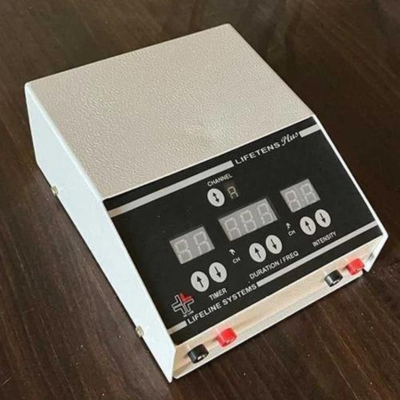
LIFETENS PLUS Micro Controller Based Hospital Model Tens Unit With Soft Touch Keys

A microcontroller-based hospital model TENS unit with soft touch keys represents an advanced medical device designed for Transcutaneous Electrical Nerve Stimulation (TENS) therapy within a clinical setting. This specialized unit combines microcontroller technology with user-friendly soft touch keys to offer precise control, customization, and effective pain management for patients under medical supervision.
Key Features:

  1. Microcontroller Technology: The unit’s microcontroller serves as the device’s brain, overseeing the treatment parameters, timing, and intensity of TENS therapy. This ensures accurate and safe application of electrical impulses for pain relief.
  2. TENS Therapy: TENS therapy involves sending controlled electrical impulses through electrode pads placed on the skin. These impulses stimulate nerve endings and trigger natural pain-relieving responses, making it effective for various types of pain management.
  3. Hospital Model Design: The hospital model of this TENS unit is tailored for clinical environments. It may include features like enhanced durability, larger display screens, and compatibility with other medical equipment.
  4. Soft Touch Keys: Soft touch keys provide a user-friendly interface for healthcare professionals to adjust and personalize the TENS therapy settings based on each patient’s needs. This allows for precise calibration of treatment parameters.
  5. Customizable Settings: The soft touch keys enable customization of settings such as intensity levels, frequency, pulse width, and treatment duration. This adaptability ensures that therapy can be tailored to individual patient requirements.
  6. LCD Display: An integrated LCD display provides real-time visualization of treatment parameters and progress. This assists healthcare providers in monitoring and optimizing therapy for patients.
  7. Safety Mechanisms: Hospital-grade TENS units incorporate advanced safety features, including lockout controls, treatment history logs, and patient-specific treatment profiles.
  8. Multiple Channels: Some units feature multiple channels, allowing healthcare professionals to administer TENS therapy to multiple areas of the body simultaneously or target different pain points for a single patient.

Applications:

  1. Post-Surgical Pain Management: Hospital settings often use TENS therapy to help manage post-surgical pain, reducing the need for strong pain medications.
  2. Inpatient Rehabilitation: TENS therapy is beneficial during inpatient rehabilitation programs, aiding in pain relief and promoting physical therapy progress.
  3. Chronic Pain Management: Hospital model TENS units assist in managing chronic pain conditions such as neuropathic pain, arthritis, and fibromyalgia.
  4. Orthopaedic Care: Orthopaedic patients recovering from fractures, joint surgeries, or musculoskeletal injuries can experience pain relief and accelerated healing with TENS therapy.
  5. Neurological Conditions: TENS therapy may be applied as a complementary approach for neurological conditions, like multiple sclerosis or stroke recovery, to alleviate associated pain.
  6. Labor and Delivery: In maternity wards, TENS units can offer pain relief during labor contractions without the use of medications.